Pregnancy and Respiratory Infections: A Practical Guide
Cold and flu season can bring extra questions during pregnancy and require different considerations regarding treatments.
Most respiratory infections are manageable during pregnancy, but they can become serious more quickly. Knowing when to seek help and which treatments are appropriate can help protect both you and your baby.
01 ——
If You Think You Have the Flu (or a Bad Cold):
If you develop flu-like symptoms, a fever of 38°C or higher, or significant respiratory symptoms during pregnancy, contact your doctor or maternity care team promptly. Don't wait several days to see if you improve.
If they find that you have influenza, antiviral treatment such as oseltamivir (Tamiflu) works best when started early, ideally within the first 48 hours. It may still be recommended later, particularly if you are very unwell or at higher risk of complications.
When you call your doctor, tell them:

When your symptoms started

Your temperature

What symptoms you have

What medications you have already taken

Remind them of any other health conditions you might have
02 ——
When Is It An Emergency?
Seek urgent medical care (even during the night) if you have:

Difficulty breathing or significant shortness of breath

Chest pain or pressure

Confusion, fainting, or severe dizziness

Severe or persistent vomiting or signs of dehydration

Coughing up blood

Severe headache with a stiff neck

Decreased fetal movement

Vaginal bleeding or fluid leakage

Severe abdominal pain

A new widespread rash or yellowing of the skin or eyes

A high fever that is not responding to treatment

Symptoms that are rapidly getting worse

03 ——
What Medicines Can I Take?
Fever and pain: paracetamol
Paracetamol (acetaminophen) is commonly recommended during pregnancy for fever and pain when used as directed.
A high fever during pregnancy can be concerning, so don't avoid appropriate treatment because of concerns about medication. At the same time, medication should be used only when needed and at the recommended dose.
Influenza: antivirals
If you have influenza, your doctor may also prescribe an antiviral such as oseltamivir (Tamiflu). Antiviral treatment is recommended during pregnancy when influenza is suspected or confirmed because pregnant women have a higher risk of serious complications from influenza.
Treatment is most effective when started early, but it can still be helpful when started later.
Cough, congestion and cold symptoms
Not all cough and cold medicines are suitable during pregnancy. Some medicines may be appropriate at certain stages of pregnancy but not others.
Depending on your symptoms and stage of pregnancy, your doctor or pharmacist may recommend medicines such as:
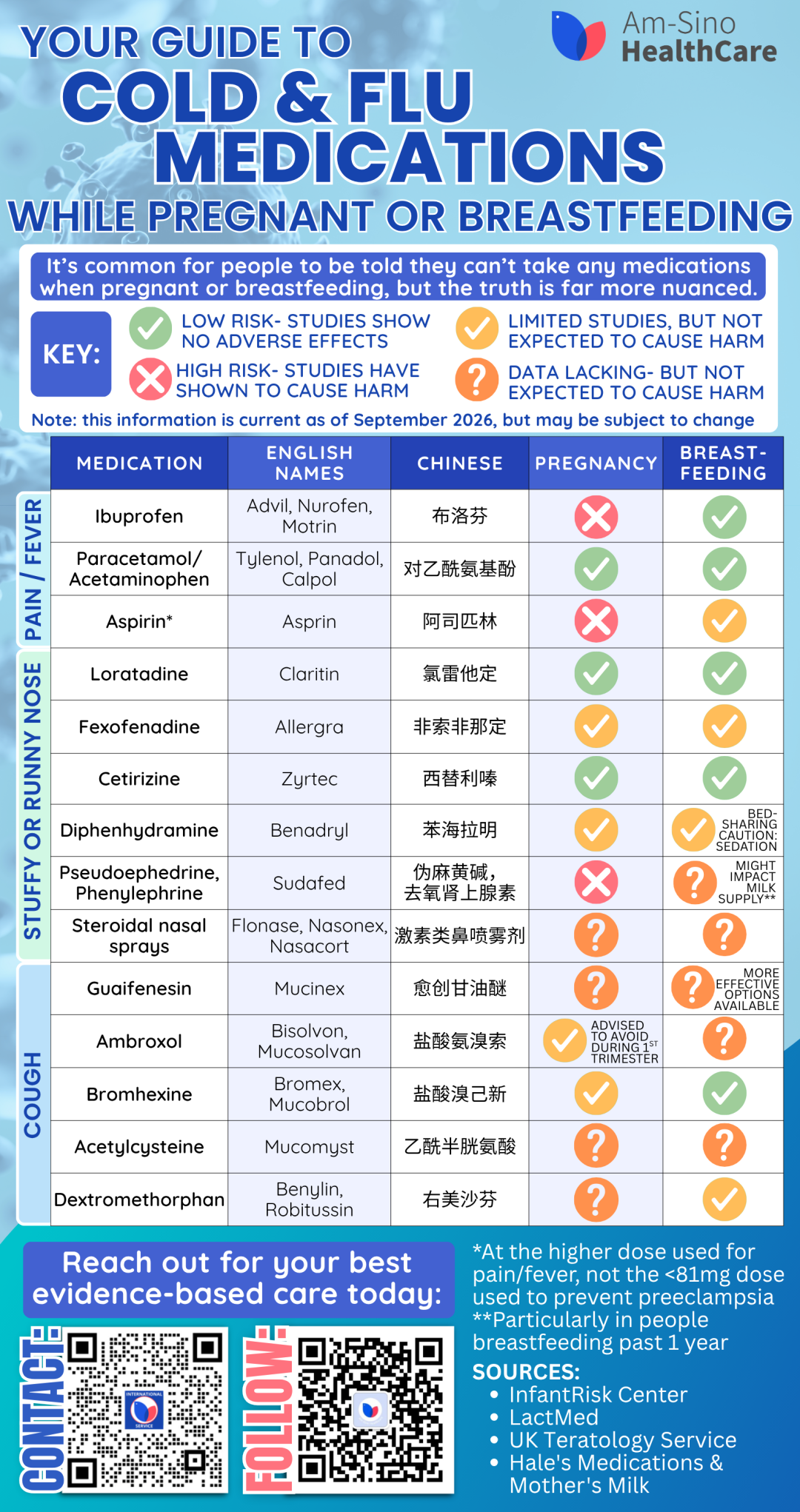
Bromhexine for a chesty, mucus-producing cough
Loratadine or cetirizine for nasal symptoms
Saline nasal spray or irrigation for congestion
We have created the following chart for your reference, however it is important to note that the advice in this field is still evolving and subject to change. If you are unsure, check with your doctor.
04 ——
Non-Medicinal Ways to Feel Better
Simple measures can help relieve symptoms:

Drink plenty of fluids, taking small amounts frequently if you feel nauseous.

Rest and sleep as much as possible.

Use saline nasal spray or irrigation for a blocked nose. If using a nasal rinse, use sterile, distilled or appropriately treated water- not untreated tap water.

Try a humidifier or warm shower to ease congestion.

Gargle with warm salt water for a sore throat.

Honey and warm lemon water can soothe a cough. Honey is safe during pregnancy but should never be given to babies under one year of age (if you have gestational diabetes, remember that honey and sweetened drinks may impact blood glucose levels).

05 ——
How Can I Reduce My Risk of Infection?
Respiratory viruses spread easily, particularly in crowded indoor spaces. During pregnancy, practical ways to reduce your risk include:

Wash your hands regularly with soap and water or use hand sanitiser.

Consider wearing a mask in crowded indoor spaces, public transport and healthcare settings.

Avoid close contact with people who are unwell when possible.

Ask someone else to care for sick family members if that option is available.
06 ——
Flu Vaccination During Pregnancy
The seasonal influenza vaccine can be given during pregnancy and is recommended because pregnancy increases the risk of serious complications from influenza.
Vaccination also provides protection for your baby. Antibodies produced by the mother cross the placenta and can help protect the newborn during the first months of life, before the baby is old enough to receive their own influenza vaccination.

07 ——
Protecting Your Baby From RSV
RSV (respiratory syncytial virus) usually causes mild cold-like illness in adults but can cause serious respiratory illness in young babies, including bronchiolitis and pneumonia.
In some countries, an RSV vaccine can be given during pregnancy, with timing depending on local recommendations. Vaccination allows antibodies to cross the placenta and provide protection to the baby after birth.
Other options, including preventive antibody treatment for babies, may also be available depending on the country, season and individual circumstances.
For more information about protecting your newborn from RSV after birth, including infant prevention, visitors and warning signs, see our companion article, “Protect Your Baby Against RSV.”
Remember ——
Most respiratory infections during pregnancy will not cause serious problems if treated appropriately: seek medical advice early rather than waiting for symptoms to become severe.

Wechat Enquiries
& Appointments

Workshops and Events Schedule
Updated regularly.
Scan the QR code to learn more.
▾▾▾





Scroll right to see more.

- Insurance Partners -

- Service Information -
Address: 17 Floor, 155 Songyuan Road,
Xuhui District, Shanghai
9:00 - 17:00 Monday to Saturday
- Contact us -

WeChat Enquiries
& Appointments