


Planning Your Birth? Here's Everything You Need to Know
On your journey to welcoming a new life, we understand that you have many questions. To help you better understand our services, we have carefully compiled a comprehensive list of questions and answers covering all aspects from prenatal care to childbirth and postpartum care. This list aims to provide you with transparent and comprehensive information to help you make the best choices for you and your baby. Now, let's address these questions one by one.
Prenatal Care:
What is your prenatal care schedule?
Routine check-ups occur around every 4 weeks until 28 weeks of pregnancy, every 2 weeks from 28-36 weeks and then weekly until 40 weeks. If the pregnancy goes longer than 40 weeks more monitoring will be required.
What is included in your prenatal care package?
Our prenatal packages include all items recommended during that time period of your pregnancy. This includesa list of routine consultations and ultrasounds, fetal monitoring, blood and urine tests. The NIPT fetal DNA testing is included in the 12-40w and 12-28w packages.
The prenatal packages costs are:
12-40 weeks: 25,000rmb
12-28 weeks: 15,000rmb
20-40 weeks: 15,000rmb
30-40 weeks: 10,000rmb
We accept mid- and late-pregnancy transfers and can arrange a transfer information appointment free-of-charge with Louise Roy, Director of International Patient Services, to go over your options. You can book this by contacting our front desk:

Are there any common costs outside of the package?
If the pregnancy is complicated (for example if baby is not growing at the expected rate or you have and emergencies or health conditions that benefit from more monitoring) there may be some more frequent ultrasounds and consultations required. Testing or treatment for Rh antibodies in Rh- mothers will also incur extra charges. It is not common to need to spend more out of this package, although it is possible.
What is the rate of women being transferred out of your care to ICU or Specialist Maternity Hospitals?
This rate is very low. Our NICU transfer rate is 1.7%. All our Quality Indicator Stats can be viewed here. Our great risk reduction stats are not due to us declining high-risk patients, in fact we our patient population includes a lot of older professional couples who are now having their first babies. This tends to be a higher-risk demographic, yet our stats show that with excellent prenatal care these risks can be well managed.
Do you offer prenatal pregnancy, birth and parenting information workshops? Who teaches them, and is there an added cost? When are they held, and is my partner invited to join them?
Yes, we do! These workshops are led by our experienced team including Louise Roy Hubbard (Lactation Specialist & Certified Doula), Shuli (Shlomit) Entes (Registered Nurse), and Maggie Wang (Certified Doula). They are held out of hours so that working couples may attend, and are offered both online (via MS Teams) and in-person at our Birth Center. As part of our commitment to informed care, these workshops are free to anyone who wishes to join, no matter where in Shanghai (or the world!) they are having their baby. We thoroughly support the attendance of partners in these workshops! See our upcoming schedule here.
“I had it in my mind that prenatal workshops needed to be attended in person, but after joining these workshops by Louise I realised that we had gotten so much more out of them than the ones we did at another hospital in person!” – (name withheld)
What kind of pregnancy support or information do you provide to patients (not the doctor visits)?
All our patients have access to our Nurse Support WeChat line, for support with all your pregnancy questions. We routinely send packets of information relative to the stages of pregnancy, so you don’t have to research alone.
Did you know that this WeChat account has a resource section where you can find information on many topics collected easily for browsing?

Birth:
What is the price for vaginal birth, what does it include and is there a discount if I pay this myself instead of using insurance?
We offer a range of birth packages designed to meet different needs and preferences, from essential care to comprehensive all-inclusive options. We also provide bundle discounts when you combine prenatal and birth packages, as well as special transfer rates for families joining us later in pregnancy.
For the most up-to-date pricing, package inclusions, and our current promotions, please reach out to our customer service team — we will be happy to walk you through the options and find the best fit for you.

Will my primary doctor be there when I have my baby? (if not, who?)
If you are following one doctor through all of your prenatal care, you can ask her to be there for your birth, and usually this is acheived- day or night. However, should an unforeseen emergency occur preventing her to attend, the birth will be with one of our other Obstetricians. Your medical records are discussed as a team at regular case meetings, all our protocol have been developed by these doctors, using international guidelines.
Does it cost more to have the doctor of my choice at my birth?
No, charging more to attend your birth is not a practice we believe in.
Do you have an emergency call number providing emergency pregnancy, labour and birth help in English?
Yes, all maternity patients are provided with a 24h emergency number- this is answered by our Head Nurse Sherry. Between them, they have many decades of maternity care experience and will provide helpful instruction. They can arrange to have our doctors call you back or meet you directly at the hospital if it is time to go!
Vaginal Birth:
Do you have a Doula service? Is there an extra charge for this?
Yes, we can arrange a doula for labour and birth help. This is at an extra charge since it is one-to-one continuous care by the same doula no matter how long the birth takes. Maggie is a Certified Labour Doula with experience in supporting unmedicated labours, water immersion for pain management, labours using epidural, inductions, and c-sections. If hiring Maggie for your Birth Support, you will also have meetings with her prenatally and postpartum and have her available via phone through your pregnancy and early postpartum period. More information about this service and fees can be found here.
Who can enter the room with me for labour and birth?
You have the right to labour and birth (including c-sections) with the birth partner of your choice. All our labour and postpartum rooms are equipped with a double sofa bed for your partner's comfort, if you would like more support people, this can generally be arranged, so long as there is not over-crowding in the delivery room. Some people also bring their other children, which can save the worry of leaving them at home with helpers or friends.
What is the epidural rate?
For vaginal deliveries the epidural rate is around 60-70% A walking epidural most commonly used, which means you can still move about and use a variety of labour and birthing positions.
What are my pain-relief options other than epidural?
We support freedom of movement in labour, eating and drinking, use of TENS machines, hypnobirthing and other comfort measures. Water (shower or tub is also supported). Narcotic pain relief is also available, but is usually not necessary.
Do you support water-immersion for pain management? Is it in a bath tub or shower? Are there any restrictions? Is there an extra cost to this?
We have specially designed pools available for labour patients! Please talk with your doctor (or ask to talk with Louise Roy) for your options. Shower is free of charge, but using the pool can incur additional charges.
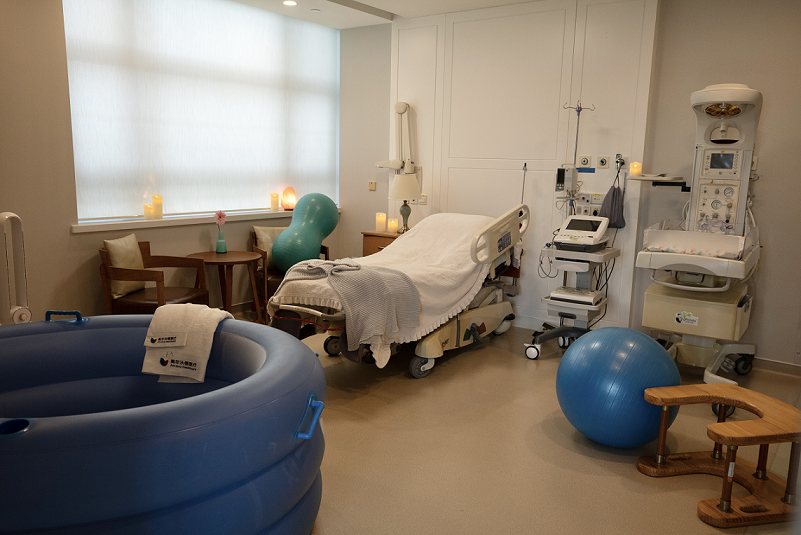
May I walk around and move freely in labour (even after my water breaks)?
Absolutely, in fact it is encouraged for a smoother and more comfortable birth.
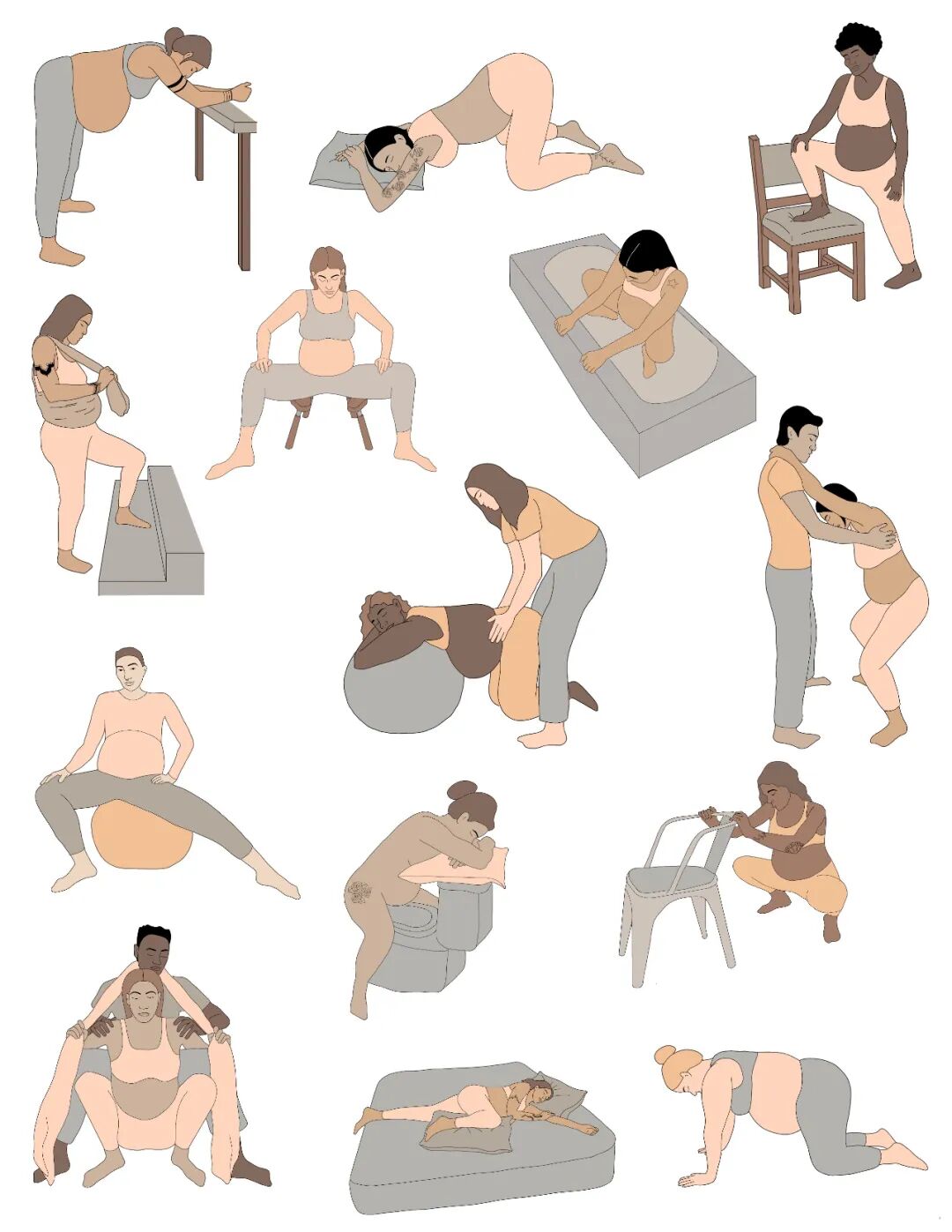
Are there restrictions on what I can eat and drink in labour?
Following the W.H.O. best birth practices, we do not restrict food or water intake, unless you are having a planned c-section. Your best hydration and energy is needed for labour and restricting this unnecessarily is counterproductive.
Will you monitor my contractions and baby's heart rate continuously in labour or intermittently?
In uncomplicated labours, fetal heart-rate monitoring is done intermittently (around every 2 hours in active labour).
What birthing positions do your doctors support?
Any position that you feel comfortable in! We provide birthing beds, but also squatting bars, stools, balls and peanut balls- it's your birth not ours! Contrary to doctors who say you can push in alternate positions but still require you to lie on your back for the moment of birth, our doctors will support your baby birthing in any position that you and your baby feel best in: squatting, side-lying, standing, on all fours- and you don’t have to be on the bed!
What is the episiotomy rate? What is the perineal tear rate?
Our episiotomy rate is 0%, maintained for three consecutive years. This is an amazing achievement, as episiotomy is no longer recommended as a routine procedure in birth. Some people will think that in the absence of an episiotomy, the birthing person will have a worse tear, but this is not true: 22.9% of women in our care birth with an intact perineum (no tear at all), and major perineal tears (Grades 3 & 4) remain at 0%.
Do you support skin-to-skin care in Vaginal Births? How long do babies spend doing skin-to-skin? How long after the birth will the baby be moved to the pediatric table for their first exam?
Skin-to-skin is routine for all vaginal births and pediatric checks are done while baby is on mother's chest. Non-urgent checks are delayed until at least one hour after birth. In the rare case that baby required resuscitation skin-to-skin will need to be temporarily halted, but this is not a common occurrence.
Do you do delayed cord clamping as per W.H.O. recomendations?
Yes! in fact we advocate for it and prefer to call it Optimal Cord Clamping as it is the normal biological state! Usually, the cord has stopped pulsing withing about 5 minutes of the birth. While it is known that in some babies, waiting until the cord stops pulsing can contribute to a mild increase in jaundice after the birth, it is not known to cause severe jaundice requiring treatment. The W.H.O.’s consensus is that the many benefits of delayed cord clamping are best for baby.

What is your C-section rate?
We are very proud that even though we have a higher-risk patient population, our total C-section rate is 26.5%. Our vaginal birth rate is 73.5% (including 8% water births), and our VBAC (Vaginal Birth After Cesarean) rate is 33%. You can view our full Quality Indicators here.
Who can enter the operating room with me if I need a c-section?
Your birth partner is invited into the operation room. If you hire a doula from our team, they are also permitted, however if your doula is from outside our hospital they are not permitted in the operation room unless they take the place of your partner.
Do you do skin-to-skin during C-sections (with the mother, not just with the non-birthing parent)?
If you request skin-to-skin for c-sections we can support this in the operating room too, however this will depend on the availability of an extra midwife to help with this. If you hire our doula she can help with this.
Do you allow delayed cord clamping in c-sections?
Yes, if the mother and baby are ok at the moment of birth, our doctors will not clamp the cord immediately.
Do your doctors support External Cephalic Version technique to turn breech babies?
Yes, this actively lowers the unecessary cesarian delivery rate of breech babies. You can read more about it here
Postpartum Care:
Is the hospital postpartum care for myself and my baby given primarily by nurses or yuesao?
Our postpartum care is all delivered by qualified nurses and midwives. Some families chose to hire a yuesao (nannies- not medically trained) for their time in the hospital, but this is not a requirement since 24h support is already provided as part of your care.
Do you arrange for transport back to my home? Do you have a carseat to use for this service?
Yes, this is all arranged by our hospital to homes within Shanghai.
When will I have to come back to the hospital? When does baby come back for follow-up? Are these visits included in the birth package?
You will come back to the hospital for early follow-up for baby with a few days of going home. After that baby's follow-up is dependent on their condition, but usually at around 14 days. You will see the doctor for a postpartum check-up at 6 weeks postpartum, and additionally at 2 weeks if you had a c-section. These checks are all included in the birth packages.
Neonatal and Pediatric Care:
What kind of NICU care does your hospital have? Can parents enter? Can parents sleep in the same room as baby undergoing treatment?
Although we work night and day to keep babies out of it, our Neonatal Care Unit is ready for emergencies, fully prepped and staffed 24hrs a day to help babies with breathing problems, etc. Although we don't often need it, it is vital to be prepared.
However, we are passionate about keeping babies with their parents, and will advocate for moving the NICU equipment and nurse to be with parents in their own room or the Neonatal Support family room whenever possible. This allows for better bonding and breastfeeding without compromising safety.
What are the reasons a baby would be transferred out of your hospital to the tertiary children's hospital NICU? What is the percentage this occurs?
This is usually for high-risk care, for example babies that are extremely premature and cannot breathe without ventilation machines, or for babies who require immediate surgery or complex testing. Thankfully, this is uncommon, and our NICU transfer rate is 1.7%. We work closely with Fudan Children's Hospital for care of these critically ill or very premature babies.
Will you arrange a nurse to go with father and baby during the ambulance transfer to help translate and register at the Children's hospital?
We strive to provide this service as part of the transfer to the Children's Hospital.
Lactation:
Do you have Certified Lactation Specialists on staff?
Yes, Louise Roy is a Certified Lactation Specialist (CLEC) , with over 15 years of experience in this field, and both our Head Nurse, Sherry, and our Birth Doula, Maggie, also both hold Lactation Specialist certifications .
How often will I be visited by a Lactation Specialist (other than the postpartum nurses and midwives) during my stay?
Maggie and Sherry rotate to see all our clients during their postpartum stay. They are also available for consultation after you leave the hospital, by making an appointment with them in our specialised breastfeeding clinic. Louise is available for online consultations by request (charges apply).
What percentage of babies in your hospital drink some formula during their stay? What is the reason for this?
Currently our rate of babies leaving the hospital exclusively breastfeeding is at 79%, and 90% of mothers are breastfeeding at discharge. Most of these babies will have never had any formula. If any formula is needed, this is done as a last resort after expressed mother's milk has been used first. Situations which might require extra milk can be weight loss (greater than 10% of baby's birth weight) or very low blood sugar in baby. Supplementation without medical reason is discouraged, and if it is needed, bottles are not advised.
Is there a lactation consultant available to make appointments with after I leave the hospital? Is a post-discharge Lactation Consultation included in my birthing package?
We reach out to our patients within a few days of discharge to check in on their progress. Maggie also runs our specialised Breastfeeding Clinic- one visit is included in the Birth Package costs.
Is there anything we've missed? If you have further questions, feel free to reach out to us for clarification, or contact our front desk for your free tour where you can ask more questions!
Guideline: delayed umbilical cord clamping for improved maternal and infant health and nutrition outcomes. World Health Organization 2014; Update 2023