We respect your privacy. Please consent to all cookies when you visit our website. Refer to our "Privacy Policy" for more information on how we handle personal data.

External Cephalic Version (ECV)
30
2026-05


The optimal position for a baby to be born vaginally is vertex (a.k.a. ‘head down’), where the baby is curled in the uterus with their head next to the cervix, the exit of the uterus.  ‘Breech presentation’ is defined by a baby who is positioned in the uterus with a different part of their body against the cervix, e.g their bottom, back or feet. Breech presentation accounts for 3-4% of term deliveries [1] and creates challenges to vaginal birth, resulting in its status as an indication for a scheduled c-section delivery.


A time-honored technique - now known as External Cephalic Version (ECV) - has returned to practice in order to turn the breach baby, therefore potentially avoiding cesarian delivery.


Helping breech babies safely back on the path to a vaginal birth:

ECV is a method to turn the baby's breech position into a head-down position. Version in this instance means to turn, Cephalic refers to the fetal head, and External indicates that the procedure is performed from the outside of the pregnant abdomen. This technique is not complicated in practice and has been a traditional obstetric technique for many hundreds of years, common among midwives and doctors of old. According to international guidelines it is still considered to be a safe and effective method, and is routinely used overseas. However, during the last few decades in China, it has become an under-utilised technique, with c-section usually chosen for breech babies instead.
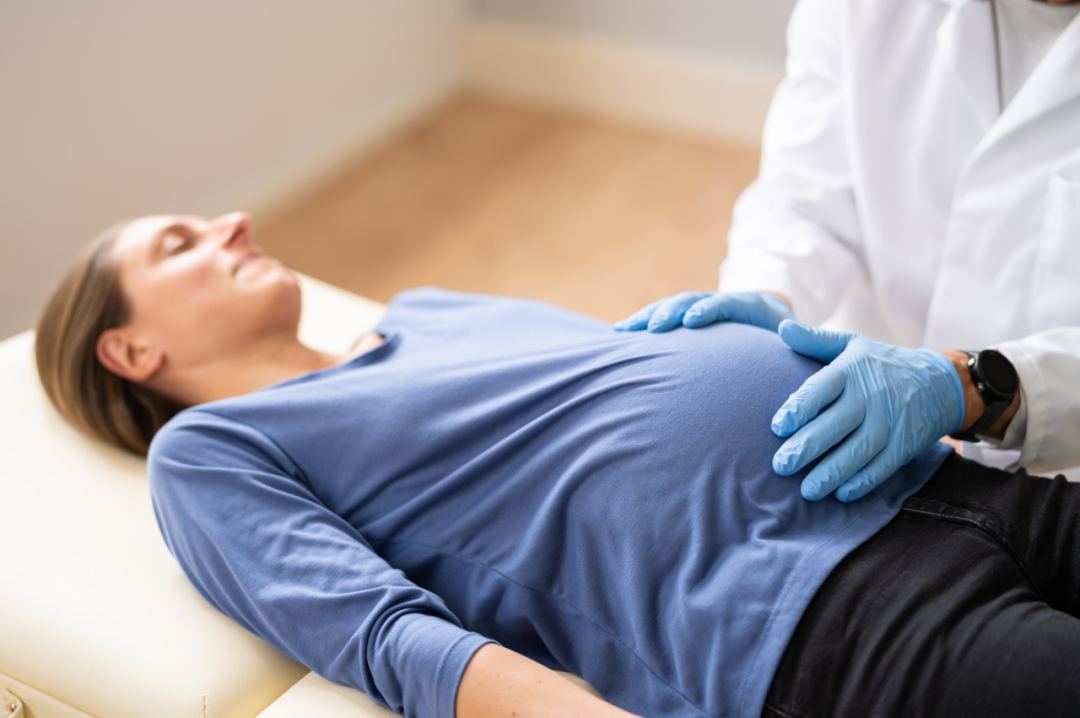

Am-Sino International Women's Health & Birth Center, however, has been performing External Cephalic Version for many years. The obstetric expert team conducts a comprehensive assessment of the mother and baby based on ECV evaluation guidelines, and formulates a personalized treatment plan.


During the procedure, medication will be administered which relaxes the uterus to increase the success rate, and the procedure is guided by ultrasound and fetal heartrate monitoring, significantly improving the safety of the procedure. In addition, a complete post-procedural monitoring process as well as stand-by measures to treat rare, but possible, complications to further increase the safety of the ECV procedure.


Q&A:


Q

What is ECV, and where can it be performed?

External cephalic version is a procedure in which the doctor applies pressure to the pregnant woman's abdomen, manually rotating the fetus forward or backward to change its position from breech to a head-down position. It is generally recommended to perform ECV after 37 weeks of pregnancy.


The American College of Obstetricians and Gynecologists' No. 161 guideline states: “With no contraindications for vaginal delivery and near-term breech presentation, External Cephalic Version has a low risk of related complications, and successful External Cephalic Version significantly reduces the cesarean section rate.”

A


Q

How is ECV performed and is it safe?

The safety of ECV is dependent on the experience of the facility and the assessment and preparations they undertake before, during and after the procedure.


If you wish to have an ECV for your breech baby, it requires assessment to determine if ECV is the best choice for you both. During the actual procedure, the doctor will monitor the baby’s vital signs, use ultrasound to monitor the condition, and medications or regional anesthesia (such as epidural) may be utilised to relax the uterus and increase the rate of successful version. After a successful ECV you will be required to stay in the hospital for monitoring for several hours. “Re-version” (the baby turning by themselves back to breech position) is rare, but possible.

A


Q

What are the risks and contraindications of external cephalic version?

Although ECV can help reduce the cesarean section rate, its benefits must outweigh the risks. Some conditions may affect the safety or success of the procedure, so your obstetrician will carefully assess the feasibility of ECV on a case-by-case basis.


If you have a breech pregnancy, you may discuss your options and candidacy for ECV with the doctors at the Am-Sino Birth Center. The ECV assessment and care is led by experienced obstetricians, with comprehensive management spanning outpatient consultation, inpatient care, the procedure, and post-procedure monitoring. We help expectant families safely and comfortably correct sub-optimal fetal positioning, increasing the likelihood of vaginal birth.

A

For more information, please scan the QR code to consult with customer service.


Wechat Enquiries

& Appointments


References:

[1] https://www.rcog.org.uk/en/guidelines-research-services/guidelines/gtg20a/ (Accessed on Sept 23, 2020).

[2] G Justus Hofmeyr. External cephalic version. UpToDate. Last updated: Apr 28, 2020. Accessed online on Sept 23, 2020."



Previously Featured

  1. New Family Suite & All-New Bundle & Save: Redefine Your Birth Journey

  1. FREE Birth Options Advice


Workshops and events  
Always updated. Scan the QR code to learn more.

▾▾▾

Scroll right to see more.


- Insurance Partners -
- Service Information -

Address: 17 Floor, 155 Songyuan Road, 

Xuhui District, Shanghai

9:00 - 17:00 Monday to Saturday


- Contact us -

WeChat Enquiries

& Appointments


Scan to make an online appointment

Scan to follow our customer service on WeChat. Our office hours are9:00-17:00daily
  • kefuerweima1.png
    American-Sino Women

    Address: No. 155, Songyuan Road, Xuhui District, Shanghai

  • dingxiang.png
    American-Sino Dingxiang Outpatient Clinic - Xiao Xiang

    Address: Floors 2-3, Annex Building 6, Clove Apartment, Lane 800, Huashan Road, Changning District, Shanghai

  • xiaowo.png
    WorldPath Clinic International - Xiao Wo

    Address: No. 399, Nanquan North Road, Pudong New Area, Shanghai (near Century Avenue)