


To Induce or Not To Induce, That Is The Question…
By Louise Hubbard Roy, Director or International Patient Services
One of the best things about WeChat is how easily it allows people to gather, share experiences, and learn from each other. This is especially valuable in pregnancy and parenting communities, where families at similar life stages can find support and connection.
As someone privileged to provide support in these groups, I often see the topic of induction of labour being discussed (induction means to start the labour through medical techniques rather than waiting for it to begin spontaneously).
Since it is common to hear confusion around why induction might be offered, as well as personal birth experiences being shared as evidence that induction is unnecessary, I would like to explain why elective induction may be offered towards the end of pregnancy and the context in which these recommendations should be understood.

Induction vs. Waiting
Personalised Decisions
The decision to induce labour or wait for it to begin spontaneously is deeply personal. It depends not only on your birth preferences, but also on your individual pregnancy, your baby, your health, your age, and your medical and obstetric history. These factors all influence the balance of risks and benefits.
When it comes to an elective induction (i.e. an induction as a treatment for a current meddical issue in you or baby), a lot of decision-making is tied to due dates. It is worth acknowledging here that, yes, due dates are indeed a social construct. They are estimates, not exact bookings, and no one can predict the exact day a baby will be born.
However, in the absence of a crystal ball, a due date provides a common reference point that allows researchers and healthcare providers to study pregnancy outcomes and estimate how risks change over time. It is not perfect, but it is the only available tool for applying population-based evidence to individual pregnancies.

The Evidence for Earlier Induction
Why Timings Matter
So, if a pregnancy due date is defined as 40 weeks, and "term" is anywhere from 39 weeks to 41 weeks and 6 days, one might ask why would an induction be offered before the due date?
The answer lies in a large body of research published over the past decade. For many low-risk pregnancies, elective induction at 39 weeks has been shown to reduce Caesarean section rates and some maternal complications (without increasing others). As a result, at least discussing this option is now considered an important part of evidence-based maternity care and informed consent.
Similarly, when comparing elective induction at 41 weeks with waiting until 42 weeks, induction is associated with lower rates of Caesarean birth, fewer maternal complications, and also comes with a significantly reduced rate of stillbirth. This information all helps to form a risk analysis for your doctor to use when offering induction as an option.

Offering, Not Requiring
Shared Decision-Making
It is important to remember, however, that offering induction is not the same as recommending it, and even recommending it is not the same as requiring it.
A discussion is an opportunity for your doctor to explain the specific risks they are considering, and gives you the opportunity to ask questions and work together on a plan that aligns with both your values and the medical information available.
Understanding the Numbers
Nonetheless, it can be incredibly difficult to sit there thinking, "I've had a textbook pregnancy and I don't have any actual medical problems- these are just statistics". It can sometimes make it feel as though the recommendation is driven by fear rather than a genuine medical assessment.
And in one sense, that reaction is understandable. A stillbirth rate of around 4-in-10,000 pregnancies at 39 weeks compared with 32-in-10,000 at 42 weeks translates to an absolute risk of just 0.04% versus 0.32%. For an individual family, both numbers are still very small.
However, healthcare professionals inevitably view these numbers differently because they care for tens of thousands of pregnancies over the course of their careers. When those statistics are multiplied across those births, they are not just numbers: they represent real families and real babies. Having supported families through stillbirth, I can say it is one of the most devastating experiences imaginable- understandably for the parents, but also for the healthcare professionals involved.
If a family were to later discover that an option known to reduce the risk of losing their baby was never discussed with them, it would add another layer of grief and regret.
Every Pregnancy Is Different
On the other hand, while it can be reassuring to hear positive birth experiences from other families if you are considering induction, comments such as "I waited until 42 weeks and my baby was fine" can be unhelpful as every person's risk profile is different.
It would be more helpful to hear about how people discussed with their doctor the benefits and drawbacks of induction, what methods were used, what options were available, and how their birth preferences were supported regardless of whether labour started spontaneously or was induced.
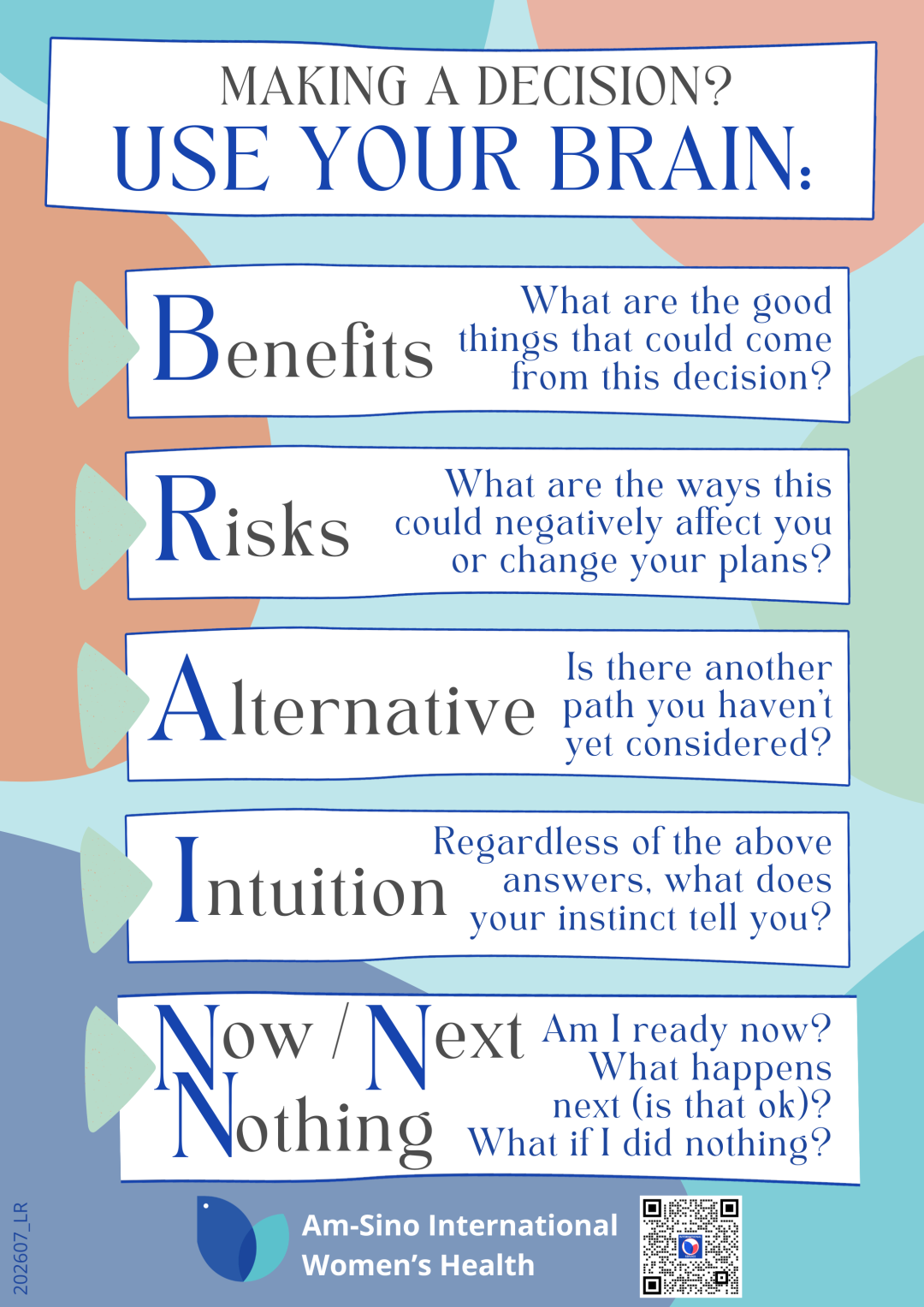
I recommend the following tool for aiding decision-making. In labour, you need to assess all these points for both yourself, your baby and the progress of your labour:
Talk to Your Doctor
It is also worth asking your doctor about their induction practices. The studies showing positive outcomes with elective induction at 39 weeks were conducted in settings that used evidence-based approaches: assessing the cervix, using cervical ripening when needed, allowing adequate time for induction, and supporting movement, eating and drinking in labour, continuous labour support, and other comfort measures.
If your doctor routinely offers elective induction from 39 weeks while maintaining a low C-section rate, it is a reassuring indication that their practice aligns with the conditions under which those favourable research outcomes were achieved.

Pro-Informed, Not Pro-Induction
Striking A Balance
I realise I may sound very pro-induction. In reality, I am pro personalised, informed, and evidence-based decision-making. As a doula and childbirth educator who has spent over 20 years supporting many thousands of families, I have enormous respect for the body's physiological ability to give birth.
At the same time, we cannot ignore that serious and devastating complications are also part of that same human biology. Modern maternity care should be about finding the balance between trusting the body’s natural ability and limiting unnecessary interventions whenever possible, while also using our knowledge and evidence-based tools to meaningfully reduce harm.
The goal is not intervention for intervention’s sake, but thoughtful, individualised care that respects both the power of physiology and the benefits of modern medicine.

References:
Alkmark, M., Keulen, J. K. J., Kortekaas, J. C., et al. (2020). “Induction of labour at 41 weeks or expectant management until 42 weeks: A systematic review and an individual participant data meta-analysis of randomised trials.” PLoS Med 17(12):e1003436. https://pubmed.ncbi.nlm.nih.gov/33290410/
American College of Obstetricians and Gynecologists (ACOG). (2014, reaffirmed 2024). “Practice bulletin no. 146: Management of late-term and postterm pregnancies.” Obstet Gynecol 124(2 Pt 1): 390-396. https://pubmed.ncbi.nlm.nih.gov/25050770/
American College of Obstetricians and Gynecologists (ACOG). (2025). “Management of Full-Term Nulliparous Individuals Without a Medical Indication for Delivery: ACOG Clinical Practice Update.” Obstet Gynecol 145(1): e45-e50. https://pubmed.ncbi.nlm.nih.gov/39513607/
Bengtsson, F., Ekéus, C., Hagelroth, A., et al. (2023). “Neonatal outcomes of elective labor induction in low-risk term pregnancies.” Sci Rep 13(1): 15830. https://pubmed.ncbi.nlm.nih.gov/37739982/
Bruinsma, A., Keulen, J. K., Kortekaas, J. C., et al. (2022). “Elective induction of labour and expectant management in late-term pregnancy: A prospective cohort study alongside the INDEX randomised controlled trial.” Eur J Obstet Gynecol Reprod Biol X 16: 100165. https://pubmed.ncbi.nlm.nih.gov/36262791/
Dahlen, H. G., Thornton, C., Downe, S., et al. (2021). “Intrapartum interventions and outcomes for women and children following induction of labour at term in uncomplicated pregnancies: a 16-year population-based linked data study.” BMJ Open 11(6): e047040. http://pubmed.ncbi.nlm.nih.gov/34059509/
Grobman, W.A., Rice, M.M., Reddy, U.M., et al. (2018). “Labor induction versus expectant management in low-risk nulliparous women.” N Engl J Med 379(6): 513-523. https://pubmed.ncbi.nlm.nih.gov/30089070/
Muglu, J., Rather, H., Arroyo-Manzano, D., et al. (2019). “Risks of stillbirth and neonatal death with advancing gestation at term: A systematic review and meta-analysis of cohort studies of 15 million pregnancies.” PLoS Med 16(7): e1002838. https://www.ncbi.nlm.nih.gov/pubmed/31265456
National Institute for Health and Care Excellence (NICE). (2021). “Inducing Labour: NICE guideline 207.” https://www.nice.org.uk/guidance/ng207/chapter/Recommendations#induction-of-labour-in-specific-circumstances
Place, K., Rahkonen, L., Tekay, A., et al. (2024). “Labor induction at 41+0 gestational weeks or expectant management for the nulliparous woman: The Finnish randomized controlled multicenter trial.” Acta Obstet Gynecol Scand 103(3): 505–511. https://pubmed.ncbi.nlm.nih.gov/38112629/
Wennerholm, U. B., Saltvedt, S., Wessberg, A., et al. (2019). “Induction of labour at 41 weeks versus expectant management and induction of labour at 42 weeks (SWEdish Post-term Induction Study, SWEPIS): multicentre, open label, randomised, superiority trial.” BMJ 367: l6131. https://www.ncbi.nlm.nih.gov/pubmed/31748223

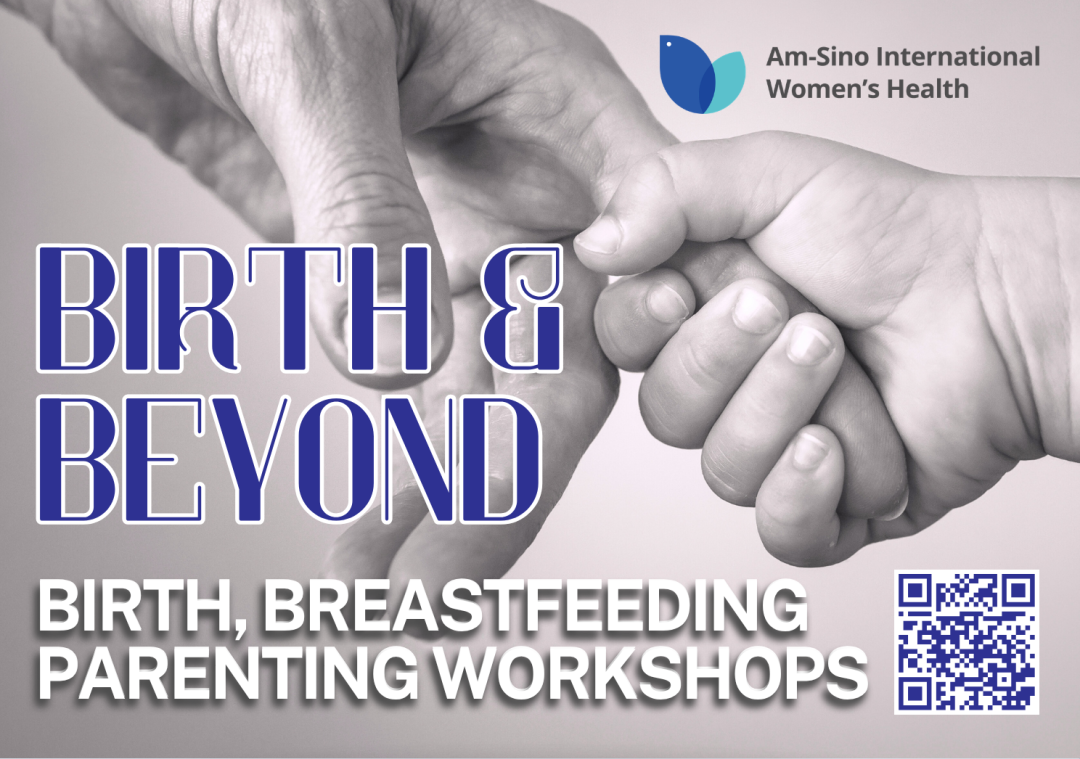
Workshops and Events Schedule
Updated regularly.
Scan the QR code to learn more.
▾▾▾




Scroll right to see more.

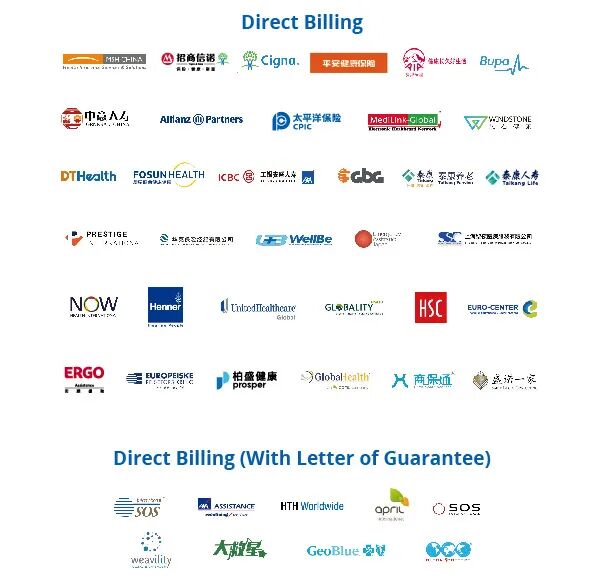
- Insurance Partners -
- Service Information -
Address: 17 Floor, 155 Songyuan Road,
Xuhui District, Shanghai
9:00 - 17:00 Monday to Saturday
- Contact us -

WeChat Enquiries
& Appointments