


Seeing Red: Your Guide to Early Pregnancy Bleeding
Seeing blood in early pregnancy often triggers worry since many people automatically equate bleeding with miscarriage. However, the truth is that most cases of first-trimester bleeding have nothing to do with miscarriage. Around 15-25% of pregnant women experience some degree of vaginal bleeding in the first trimester, yet the majority go on to have healthy pregnancies. Only a small percentage of bleeding episodes are linked to serious complications such as miscarriage or ectopic pregnancy.

The 4 Most Common Causes of Early Pregnancy Bleeding
1. Physiological / Short-Lived Bleeding
(Occurs in 30-40% of cases of early pregnancy bleeding - the safest type, generally not linked to miscarriage)
Implantation bleeding (6-12 days after conception): very light pink or brown spotting lasting 1-3 days.
Cervical sensitivity: for example, light bleeding after intercourse.
2. Bleeding Accompanied with Low Pregnancy Hormones or Slow Fetal Growth
(Occurs in 30-40% of cases of early pregnancy bleeding.)
Light dark red or bright red spotting, sometimes accompanied by mild lower abdominal discomfort.
About half of these pregnancies will continue normally and result in a healthy baby.
3. Ectopic Pregnancy - HIGH ALERT
An ectopic pregnancy occurs when the fertilized egg implants outside the uterus, most commonly in the fallopian tube.
While only 1.5-2% of all pregnancies are ectopic, ectopic pregnancies are identified in 10-15% of women who experience first-trimester bleeding.
Symptoms may include dark red spotting that comes and goes, along with persistent lower abdominal pain.
Ectopic pregnancy is a life-threatening emergency. In any case of early pregnancy bleeding, it must always be considered and ruled out.
4. Other Causes May Include
Cervical polyps
Vaginal infections
Molar pregnancy

Misconception: More Blood = Worse Outcome
Many people wrongly assume that light bleeding means everything is fine, while heavy bleeding means miscarriage. Unfortunately, it is just not that simple.
Light bleeding does not always mean there is no danger:
For example, a missed miscarriage (where the embryo has stopped developing and no longer has a heartbeat) is often diagnosed before any bleeding occurs; and an ectopic pregnancy may begin with only minimal dark spotting, but can rupture suddenly and cause severe internal bleeding.
Heavy bleeding does not always mean miscarriage is inevitable:
For example some women develop a subchorionic hematoma (a blood clot between the placenta and uterine wall). This can cause bleeding heavier than a normal period, yet the pregnancy may still be completely viable with a strong fetal heartbeat.
What to Do If You Experience Bleeding
1
Keep track of the bleeding volume using a pad (not tampons). Note when it started, the colour, amount, presence of clots, and whether there is any abdominal pain.
2
Do not start medications such as progesterone or medicines intended to stop bleeding without medical advice. Self-medicating can mask the underlying cause and delay proper diagnosis.
3
See a doctor: the first priority is usually an ultrasound to confirm that the pregnancy is located inside the uterus and to rule out an ectopic pregnancy. Blood tests to measure pregnancy hormone levels may also be recommended.
Daytime Clinic Visit vs. Emergency Visit
It is usually reasonable to wait and see your doctor in clinic the next day if you have:
Brown or pink discharge only
Very light bleeding (a panty liner is sufficient)
No pain, or only mild lower abdominal pressure


Final Takeaway
First-trimester bleeding is common, and in most cases the pregnancy continues normally. However, this does not mean it should be ignored. If you experience bleeding during pregnancy, try to stay calm: bleeding is not necessarily bad news, but prompt medical assessment is needed to identify the cause.




Scroll right to see more.

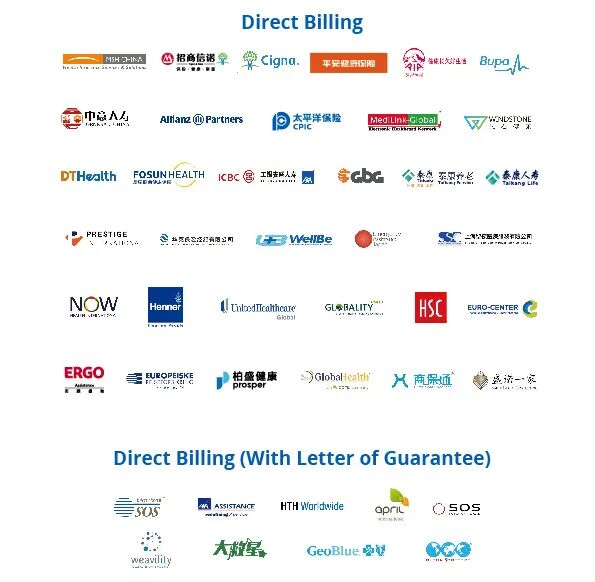
- Insurance Partners -
- Service Information -
Address: 17 Floor, 155 Songyuan Road,
Xuhui District, Shanghai
9:00 - 17:00 Monday to Saturday
- Contact us -

WeChat Enquiries
& Appointments