


Your Baby is Not Broken : Evolutionary approaches to parenting
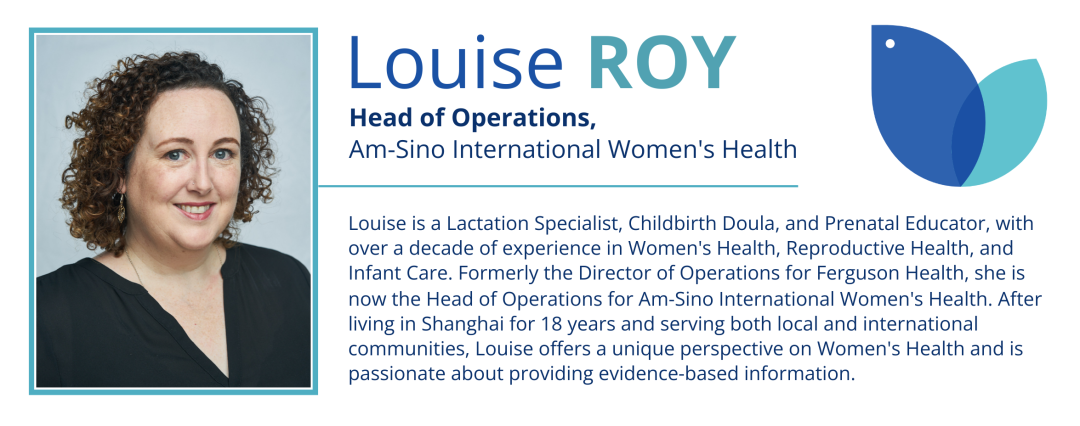
As a Certified Lactation Educator Counsellor in a bustling maternity hospital, I find myself surrounded by babies all day long. However, my route to this profession was a little round-about, in fact I started out with a degree in Archaeology and Anthropology.
Along the way I ended up in my current profession, but my beginnings –studying the literal beginnings of the human species- have remained prominent. The longer I do this, the more obvious it is to me that rather than searching for revolutionary new ways to parent, we need to first understand the evolutionary design that is underpinning us as humans, so that we can better understand our babies' needs.

The one thing you know, for sure, when you are approaching the birth of your baby is that your sleep is going to change. You may be already researching this, making plans, and reading up on the topic. But with a plethora of books out there too choose from it’s hard to know what to think. If you type “baby sleep book” into amazon you get over 4000 results, and surprisingly, many of the best sellers are not evidence-based, nor backed up by medical experts. Looking at reputable websites to understand baby’s sleep needs and safety rather than following a for-profit philosophy could be a better use of your time (see the end of this article for some website suggestions), but in the meantime let’s take a moment to understand the what’s normal for most babies over their first few days.
Angels vs Demons
After what is often a long and tiring labour for first time mothers, you probably just want to sleep and let the baby sleep. And surprisingly, after their initial skin-to-skin time, many babies are often happily able to be wrapped up and placed in a baby bed, while you get some rest. You look at your partner and say, “This is not too hard, see? All the reading we did in pregnancy is already paying off!”
During the second day baby is also fairly sleepy and by this stage you are actually high-fiving each other, convinced you got a “good baby”.
Then the second night comes, and the trouble starts. Your sweet, sleeping, angel baby suddenly turns into a demon and you don’t know what you did wrong. Your baby, who prior to this was happy to lie in her crib and only woke for feeds every two hours, now behaves like her bed is poison, and is clamoring to suck at your breast. ALL. NIGHT. LONG.

The comparison with the angel baby of the previous 24 hours is startling, and it is common for new parents to assume this change is due to a physical problem (gas) or a feeding problem (“my baby is starving!”). Reaching for a big dose of formula milk at this stage also seemingly confirms the “problem”, as suddenly the baby has had the biggest, densest, meal of her tiny, short life and falls into a post-thanksgiving food coma. Seemingly, the problem is solved.
However, the fact of the matter is that there was actually no problem in the first place, and the baby was following perfectly normal instincts on her second night.
How did we get here?
To understand this, we must step back and examine how we evolved.
Comparative to other species, and even to other primate species, humans have very difficult labours, with our babies being born quite immature, regardless of the pregnancy duration. Why did we evolve like this, when natural selection is supposed to encourage evolution that is advantageous to us?
As far as we can tell, it all started around 200,000 years ago, when the advantage of walking upright developed for our hominin ancestors and the pelvis changed shape to support walking on two feet. Simultaneously, the brains of humans got bigger, which was also an evolutionary advantage to the species.

CREDIT: Rodrigo Lacruz, published in the Journal of Nature Ecology & Evolution
However, while this better equipped us as a species to live, and dominate, the downside is that our babies are a tighter fit coming out of the pelvis. To counter this, the gestational length in humans is shorter than that of other primates of similar size, and the human baby, is actually born with only 25% of their brains fully developed at birth.
So, what does this mean? While other mammal babies are much more agile and independent when they are born, the human baby is still essentially a fetus, depending on its caregivers for all functions of life. This is the Fourth Trimester — a period when babies continue the developmental work that would have taken place in the womb, had we not evolved to give birth earlier.

What is the first thing our babies do to help themselves survive this lack of maturity at birth? After they make the arduous journey of rotating their bodies through the smaller, evolved birth canal, they often recover from the effort by being excessively sleepy for the first 24 hours. This is your “angel baby”. But then they wake up and their natural instincts kick in and they do the only things they know how to do- demand to be held and suck ferociously at whatever they can get into their mouths while they are being held. Cue the “demon”.
The evolutionary advantage of this is that the babies who demanded to be held survived, as they didn’t get left on the floor of a cave to waste away, be eaten or lost. And the babies who demanded to be held and had an insatiable urge to suck, had ample opportunity to thrive by getting all the life-saving breastmilk they needed (and boost the parent's milk supply in the process).
When we look at other mammals and see their newborns suckling all day-long we think “What a good baby mammal. They’re doing exactly what they need to do”, and when we see a baby mammal that is lying away from the mother, apparently lacking the urge to suck and be near her, it sets off alarm bells in our mind, “uh-oh, what’s wrong with this baby?”
However, our human society has come to the point where we expect our babies to lie quietly in their own beds, and only need to feed and be held when we say it is time. Somehow this is the “good baby”, and the baby that demands to be held and to suck all night long is the “bad baby”. We start to worry that there is something wrong with the baby, when in fact this baby has everything right with it, it’s actually our societal expectations that are wrong.

How did we come to perceive a natural evolutionary state so incorrectly? When did we start to worry that our biologically normal babies are broken? Why do we worry that we will spoil them by meeting a need that is as intrinsic to them as breathing? Our babies assume they are being born into a primitive society 200,000 years ago, not into a modern society of abundance and safety. Our babies need us to hold them, and feed them, on demand and around the clock. That’s their normal.
I fully accept that, although this is normal, it can be absolutely exhausting to do this, which is why we developed a social tendency towards multiple caregivers -the tribe- who's role is to help the new mother where they can. As physically tiring as it can be at times, if you are simultaneously worrying that there is something wrong with your baby, or that there is something wrong with your parenting, this period is utterly exhausting. Many parents find that as their mental and emotional stress increases by worrying that they’re “doing it all wrong”, the baby clings to them even more. Their little brain is saying: “If my mum is stressed, there must be danger- I need to stay with her!”

Understanding that the biology wiring our babies at birth has been a huge part of our survival as a species, it’s also no surprise that many older babies can be experiencing this effect still. The need for babies to find comfort and safety with a caregiver is not as strong in older babies, but it intensifies during times of stress, change, and development. This can mean that at various times throughout their infancy they can repeat the patterns of a newborn. They are not “regressing” but “progressing” through important new developmental stages, and looking to you for safety and security while they acclimatize.

Acceptance allows us as parents to meet the baby where they are, knowing that their behaviour is normal. From this starting point together, we can progress through their development with them. There may be ways to adjust naturally and gently – or “nudge” – your babies towards a rhythm that is more fitting for your lifestyle, but it probably won’t happen overnight.
Ultimately, you cannot spoil your baby (no matter what your mother-in-law tells you), and knowing that you are already doing everything right and that things will get easier as they develop and grow will take the pressure off needing to parent with perfection. Instead, look back at how we evolved to get here and allow yourself to recognize that your baby is not broken, but perhaps our societal expectations are.